
The Future of Cannon Artillery
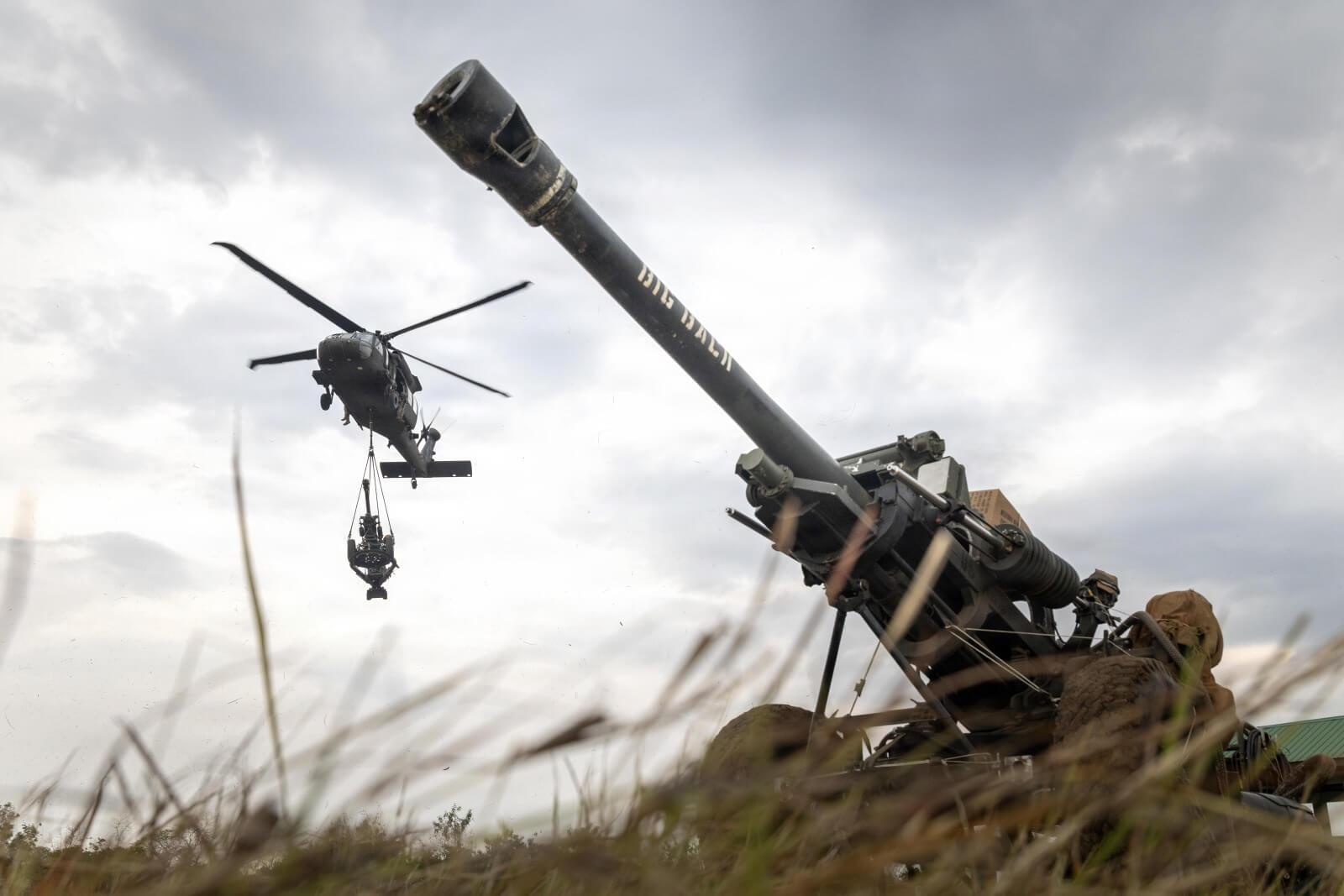
In recent years, the U.S. Army Field Artillery increased its range and volume of fire through several modernization investments. These efforts included replacing the M270A1 Multiple Launch Rocket System (MLRS) with the enhanced A2 variant and converting M142 High Mobility Artillery Rocket System (HIMARS) battalions from two batteries of eight launchers to three batteries of nine launchers. An ongoing reorganization began returning the rocket launchers removed from Division Artillery formations two decades ago. For long-range fires, Operation Epic Fury confirmed the lethality of the Precision Strike Missile (PrSM) during the munition’s first combat employment in March 2026. In addition to PrSM achieving the longest strike range for any American Field Artillery system in history, Army Tactical Missile Systems fired from National Guard HIMARS batteries successfully engaged maritime targets and contributed to the sinking of several ships, including a submarine.
While addressing theater and operational capability gaps through the development and procurement of long-range precision fires, the U.S. Army has not made comparable investments to close known tactical fires gaps, specifically the cannon artillery relied upon by soldiers in the close fight. Regardless of how many targets the Field Artillery destroys, neutralizes, or suppresses at 70, 100, or 500 kilometers, army divisions must still seize and hold terrain at a tempo constrained by the speed they can maneuver any given day. Infantry and Armor units rely on cannon effects like smoke which cannot be replicated today by rocket systems to obscure their movement when they are most vulnerable on the battlefield. In desperate situations, mounted and dismounted ground forces depend on immediate suppression and danger-close protective fires to prevent being overrun, which again, rockets cannot provide within reasonable safety tolerances for friendly forces.
This article describes three U.S. Army cannon transformation efforts relevant to the Field Artillery community of interest. After outlining the latest guidance from Army senior leaders on how to approach Fires transformation, it explores towed howitzer modernization opportunities before closing with the debate over upgrading from a 39-caliber to 52-caliber howitzer. Although Division Artillery formations continue experimenting with launched effects, loitering munitions, and unmanned aerial vehicles (UAV), those capabilities lie beyond the scope of this analysis.
Senior Leader Guidance
When it comes to cannon artillery, Army senior leaders directed the Fires Center of Excellence and the Fires Portfolio Acquisition Executive (PAE) to improve mobility, survivability, and lethality for howitzers on the battlefield. More broadly, they asked for improved digital interoperability by breaking down the firewalls that slow the ability to pass targeting data from any sensor to the best shooter. Security classification guidelines, vendor-locked proprietary software coding, and constrictive language in requirements documents hinder the free passing of data between Military Intelligence, Field Artillery, and Air Defense Artillery command and control systems. Data sharing at the joint level proves even more challenging.
At the Association of the U.S. Army conference last October, Secretary Daniel Driscoll showed a photo of a soldier, born in 2004, sitting behind a computer to use the Advanced Field Artillery Tactical Data System (AFATDS) software developed in 1995 – nine years before the soldier’s birth. The secretary stated that soldiers “go back in time” every day when they leave their homes to go to work in the Army, and because of the age of the Army’s network, they are “conditioned to expect technological failure.”
Technology continues to accelerate the targeting cycle, and artificial intelligence promises to enhance the fidelity of staff estimates to provide commanders with greater confidence when making decisions in combat. AFATDS’s replacement, the Artillery Execution Suite (AXS), aims to move fire support into the digital age, leveraging the cloud to share data. This will give the Army flexibility to integrate sensors beyond counterfire radars and send firing data to more than just Field Artillery cannons and launchers. Over time, users could add apps to AXS, like the ones soldiers download quickly onto their personal phones, for controlling mortars, UAVs, loitering munitions, and launched effects.
Yet if the Army does not invest in and rapidly field the next generation tactical radios needed to pass AXS data, fire mission processing times may increase if AXS stops in battalion fire direction center where operators must type coordinates into a separate AFATDS computer to send data to the guns via legacy radios. Digital firing solutions must reach howitzer sections fast enough to affect time-sensitive targets. Equally important, requirements must be written to ensure that American technical upgrades include a pathway for interoperability with allies and partners in coalition warfare. For example, could a Polish Field Artillery battalion providing reinforcing fires receive digital fire missions from the 1st Cavalry Division Artillery?
Saving time is not just about engaging ground targets; it may also determine whether firing platforms survive by displacing before receiving incoming fire. Based on the capabilities of potential adversaries, howitzer crews have three to five minutes to displace before receiving counterfire. A compounding problem is that the adversary may have passive or persistent sensors on the battlefield watching guns leave hide spots, pull into position, or gather for ammunition resupply where they are most vulnerable. This returns to the importance of mobility, survivability, and lethality for howitzer modernization.
Towed Howitzer Modernization
U.S. Army towed artillery is no longer survivable on the battlefield. According to the National Training Center, the average time required by a M777 crew to emplace, complete a fire mission, and displace a safe distance exceeds 25 minutes. 105mm M119 howitzer crews complete fire missions faster at the Joint Readiness Training Center, but still nowhere near the three to five-minute window before they could expect to receive counterbattery.
When it comes to light infantry operations, none of the potential 155mm wheeled howitzer options would be suitable to replace the M119. 105mm ammunition production is limited globally, and industry does not offer a precision 105mm fuze or projectile. The U.S. Army must maintain helicopter-transportable and air-droppable indirect fires platforms to support the light infantry responsible for Joint Forcible Entry operations. Typically, this involves an airborne drop to secure an airfield for follow-on forces to land with 155mm guns.
However, there may be an alternative to pursuing a new howitzer to provide direct support fires to the light infantry. Early in 2026, Army senior leaders directed the Combat Capabilities Development Command (DEVCOM) to explore the feasibility of replacing the M119 with a mobile, extended-range 120mm mortar. Recent achievements by DEVCOM in designing an extended-range 81mm mortar suggest that investments in 120mm upgrades may achieve greater range and replicate 105mm effects, including smoke and precision strike.
As the research and development phase begins this year, the Army must ask several programmatic questions:
•Who would pay for it? Currently the Fires PAE does not include mortars in its portfolio, even though it is an indirect fires system. The Ground Maneuver PAE prioritizes mortar investments based on Armor and Infantry requirements, not the Field Artillery.
•Should the Field Artillery branch assume responsibility from the Infantry for a portion of the mortars manning and training? Currently the Infantry School provides instruction for all mortarmen.
•Should the Field Artillery branch defer to the Infantry to provide direct support fires for light brigades? Elimination of cannon battalions from light divisions would also remove the Field Artillery battalion commander who serves as the fire support coordinator in each maneuver brigade.
This is larger than simply finding a viable firing platform. Heavy mortar integration may lead to permanent force structure changes as revolutionary as last year’s conversion of an entire cannon battalion into a rocket formation in the 25th Infantry Division on Hawaii. This involved training to convert enlisted Military Occupational Specialties from cannoneers to rocketeers, improving motor pools for heavier vehicles, and reorganizing division-level sustainment to support the new demand for rocket pod resupply.
DEVCOM only began the extended-range 120mm exploration effort this year, so it will take time for this concept to mature. Separately, the Program Manager for Howitzer Systems is aware of breach-loading 120mm mobile mortars from international vendors that may be available for experimentation. Viable transformation-in-contact experiments would require sufficient funding and an endorsement from the Fires Center of Excellence based on how close these systems replicate 105mm effects.
Concerning 155mm howitzers, last fall Army senior leaders approved the Fires PAE’s acquisition pathway to deliver a Mobile Tactical Cannon by 2031. This wheeled variant would replace the towed M777s of Field Artillery battalions providing direct support to Stryker brigades. The requirement may expand to replace M777s in the composite Field Artillery battalions of light divisions which contain one battery of M777s. Concerns related to the transportability of Mobile Tactical Cannons to support contingency plans will influence the decision on what quantity of new howitzers to procure.
Over the past two years, program office personnel and representatives from the Fires Center of Excellence visited wheeled howitzer vendors in their factories and on live-fire ranges, met with engineers to reimagine resupply operations, and discussed U.S. ammunition and fire control integration. The data collected from this analysis is comprehensive, and vendors have answered hundreds of specific questions which will inform the program office’s final decision on which platform would be most appropriate for Mobile Tactical Cannon. The Agile Sustainment and Ammunition PAE will provide as critical of a role as the Fires PAE in shaping the delivery schedule because the Program Manager for Combat Ammunition Systems must plan, resource, and execute the testing for ammunition compatibility.
Regardless of the system Army senior leaders ultimately select, U.S. Field Artillery formations will become more mobile, survivable, and lethal with a Mobile Tactical Cannon. Paired with next generation tactical radios and AXS fire control software, the towed howitzer replacement will reduce fire mission processing times, increase rates of fire, and extend ranges. One critical component to this calculus will be new investments in howitzer munitions because all of the competitors have moved away from a 39-caliber howitzer to 52-caliber instead.
The 52-caliber Debate
Through the Program Manager for Combat Ammunition Systems, the Army began investing in extending the range of 155mm munitions to 70 kilometers in support of the Extended Range Cannon Artillery (ERCA) prototype cancelled in 2024. Cooperation with vendors during the ERCA exploration revealed new approaches to enhance fuze sensors, projectile stabilization through long-range flights, and the quality of propellants to decrease the munition’s wear on gun tubes. At an extended range, a precision fuze becomes a necessity to correct for atmospheric stresses on a standard High Explosive projectile to have the 50 meter accuracy achieved at current ranges. Fuze sensors depend on counter-electronic warfare software, but this is costly to develop and not guaranteed to protect against future jammers. The Ukrainian’s employment of U.S. Excalibur precision rounds is informing ongoing upgrades to counter-jamming software. Bofor and KNDS began upgrading their intelligent BONUS round, with its two sensor-fuzed submunitions, based on operational input from artillerymen who fired them in combat in the desert and in training in the arctic.
Yet when it comes to exquisite rounds, how many could the U.S. Government afford for its war stocks? Not only may the costper-kill climb, but the defense industrial base’s production capacity may slow if munitions become more technically complicated to manufacture. If the Army invests in alternative munitions to cannon projectiles, like the rocket launched PrSM, then headquarters should reassess the quantities of 155mm exquisite munitions for the Total Army Munitions Requirement. Throughout this “innovate at the round” effort, the Army must evaluate whether alternative munitions achieve the battlefield effects provided by cannon-delivered systems before divesting of them.
Upgrading from a 39-caliber to 52-caliber howitzer matters for driving down munition costs while increasing range and lethality. The Paladin M109A7, still in production to provide direct support fires to Armor divisions, has a new Bradley chassis, but the turret includes the refurbished armament and breach from its A6 predecessor. Astonishingly, many of the breaches still in service date back to the 1960s and 1970s.
If the Army wants to range 70 kilometers with precision, but maintain its 39-caliber cannons, ammunition experts must explain how the more powerful propellant needed to reach this distance decreases tube life, fatigues armament components, and causes overpressure for the crew which would limit the number of rounds they could fire safely in a 24-hour period. A 52-caliber howitzer is appealing because it can endure more stress than a 39-caliber chamber, and it would better protect the crew to increase the system’s rate of fire.
Transforming to 52-caliber would also improve interoperability with U.S. allies and partners who already began replacing their legacy howitzers with BAE Archers, KNDS Caesers, Hanwha K9s, Rheinmetall RCHs, and Elbit Sigmas. Regarding North American Treaty Organization (NATO) standardization agreements (STANAG), alliance members aspire to have interchangeable powders, rounds, and fuzes, but stocks vary from one nation to another, as discovered in 2022 when donating artillery munitions to Ukraine. It turns out that a 155mm round is not always a 155mm round. However, recent work completed by joint ballistics boards and policy guidance from defense ministries to address disparities between national munition producers will move individual allies closer to long-standing STANAGs.
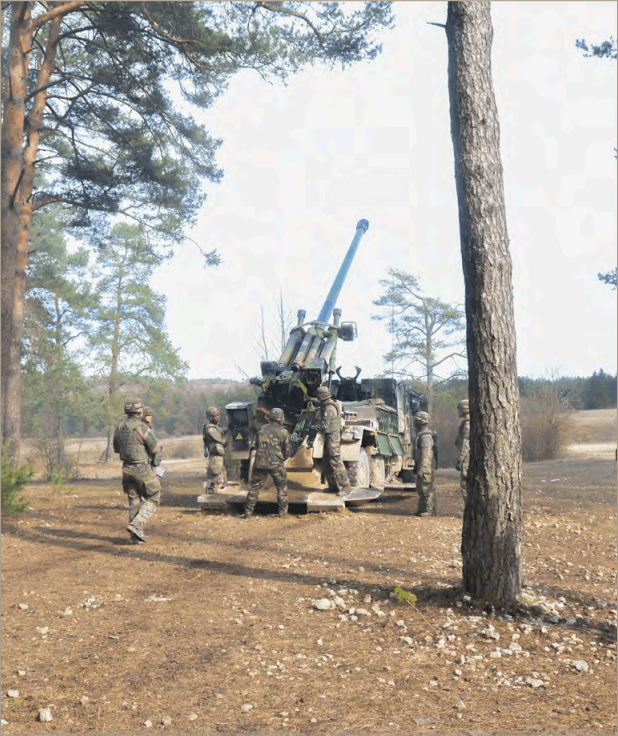
French Soldiers assigned to the 40th Field Artillery Regiment prepare to fire a CAESAR 155mm .52-caliber self-propelled howitzer. ((U.S. Army photo by PFC Denice Lopez))
A System of Systems
As the U.S. Army modernizes artillery, leaders at every level must never lose sight of the intricacies of the fire support system-of-systems. The Field Artillery only affects targets to enable soldiers to ultimately seize and hold terrain – whether they are on foot, ride in mechanized vehicles, or drive tanks. While it is tempting to become captivated with emerging technologies, industry’s wares must be tested to demonstrate how well they function in combined arms operations, and ideally, joint and coalition experimentation. The United States must also adopt the right lessons from the Ukraine war when it comes to the relevance of towed artillery because they are fighting a positional defense for their survival, which is not how NATO forces would fight according to our contingency plans.
Finally, Army senior leaders must be cleareyed about the implications of replacing cannons with UAVs, loitering munitions, and launched effects to provide acceptable quantities of direct support fires to two or three maneuver brigades in a division. After all, howitzers remain the only all-weather massing fires capability, and cannon munitions remain significantly cheaper than rockets which will impact the Army’s ability to afford magazine depth or scale production to accelerate resupply during an extended conflict that exhausts war stocks.
ABOUT THE AUTHOR: COL Gregory M. Tomlin, PhD serves as Assistant Commandant of the U.S. Army Field Artillery School. After receiving his commission as a Field Artillery officer in 2001, he served in self-propelled and towed howitzer units in four Army divisions and commanded two M777 battalions. Most recently he worked in the transformation enterprise as the Army Capability Manager for Division Artillery then as the Fires Transformation and Lessons Learned Manager at the Fires Center of Excellence at Fort Sill.