Ghosts in the Catacombs
Introduction
The U.S. Army's rocket and missile formations face a fundamental challenge in preparing for large-scale combat operations (LSCO) in the Indo-Pacific. Archipelagic warfare demands extended-range communications, hardened and camouflaged command and control (C2) infrastructure, and alternatives to air-dependent deep strike operations. Rocket artillery battalions still fight with a Modified Table of Organization and Equipment (MTOE) built around outdated command posts that are optimized for line-of-sight communications. Their structures leave them reliant on friendly air superiority and hiding unnatural shapes among natural terrain features to survive. One unit used an exercise to attack these design flaws.
From 10 to 20 April 2026, 1st Battalion, 3rd Field Artillery Regiment (1-3 FAR), used Operation Courage Lethality 26 (CL26)—a corps-level exercise spanning multiple training centers—as a testbed to see whether the agnostic C2 architecture validated during Operation Tropic Thunder could scale. The HIMARS battalion also assessed six interrelated concepts:
- Commanding from an underground facility (UGF).
- Developing an ultra-mobile fire direction center in a civilian vehicle.
- Directing fires across 500+ miles of separation—simultaneously.
- Pushing Mobile User Objective System (MUOS) communications to the launcher level—building on the edge-node concept from Tropic Thunder.
- Integrating small unmanned aerial systems (sUAS) into reload operations.
- Executing long-range ground raids (LRGRs) without air support.
Results prove that HIMARS battalions can adapt to LSCO requirements in contested, distributed environments today—without waiting for acquisition solutions—by fundamentally rethinking how existing systems are brought to bear.
Operational Problem
An archipelagic Indo-Pacific fight imposes conditions fundamentally different from continental operations. Units must operate across hundreds of miles of ocean, operate out of hardened positions, and execute deep strikes without guaranteed air support. Command posts must remain survivable while maintaining connectivity with higher headquarters, supported maneuver elements, and geographically separated firing units.
For rocket battalions, the challenge is grave. HIMARS units can range targets across the archipelago, but they depend on C2 architectures that can direct fire in contested environments. The question confronting 1-3 FAR was whether a battalion could deliberately distribute its C2 across multiple autonomous nodes—including hardened facilities and ultra-mobile platforms—while maintaining fires responsiveness and survivability during live-fire operations.
During CL26, the battalion experimented by deliberately imposing the constraints expected in an archipelagic LSCO environment: geographic separation, degraded communications, and the requirement to operate from protected positions. The answer to these problems is the edge-node concept.
The Edge-Node Concept: Foundation for Distributed Operations
By equipping a HIMARS with a PRC-158 and MUOS (one per platoon), that launcher becomes an edge-node. It can receive firing data from the battalion fire direction center (FDC) and redistribute it to any other HIMARS via the Advanced Field Artillery Tactical Data System (AFATDS). 1-3 FAR already proved the initial concept during Operation Tropic Thunder in November of 2025 at Yakima Training Center (YTC), WA. This time, the battalion was better equipped to tackle a major issue from the previous operation: commanders talking to commanders.
The new PRC-158 radios solved the net call problem, letting the battalion commander speak to his subordinate commanders at distance simultaneously. The combination of the radio mount and MUOS let the commanders talk without movements that could reveal positions and without losing command presence at each node. The enhanced connectivity also helped address another historic FDC problem; troubleshooting.
Troubleshooting happened faster. The SIPR Teams Fires Chat let the FDCs fix problems as fast as they could type. What took minutes with AFATDS free texts took seconds to communicate, letting commanders at the battery and battalion level control the tempo of the fight.
The edge-node concept enabled C2 for LRGRs, HIRAINs, live fires across multiple states, and survivability in underground structures—by solving the range problems inherent to legacy systems.
Commanding from Underground: Hardened C2 Infrastructure
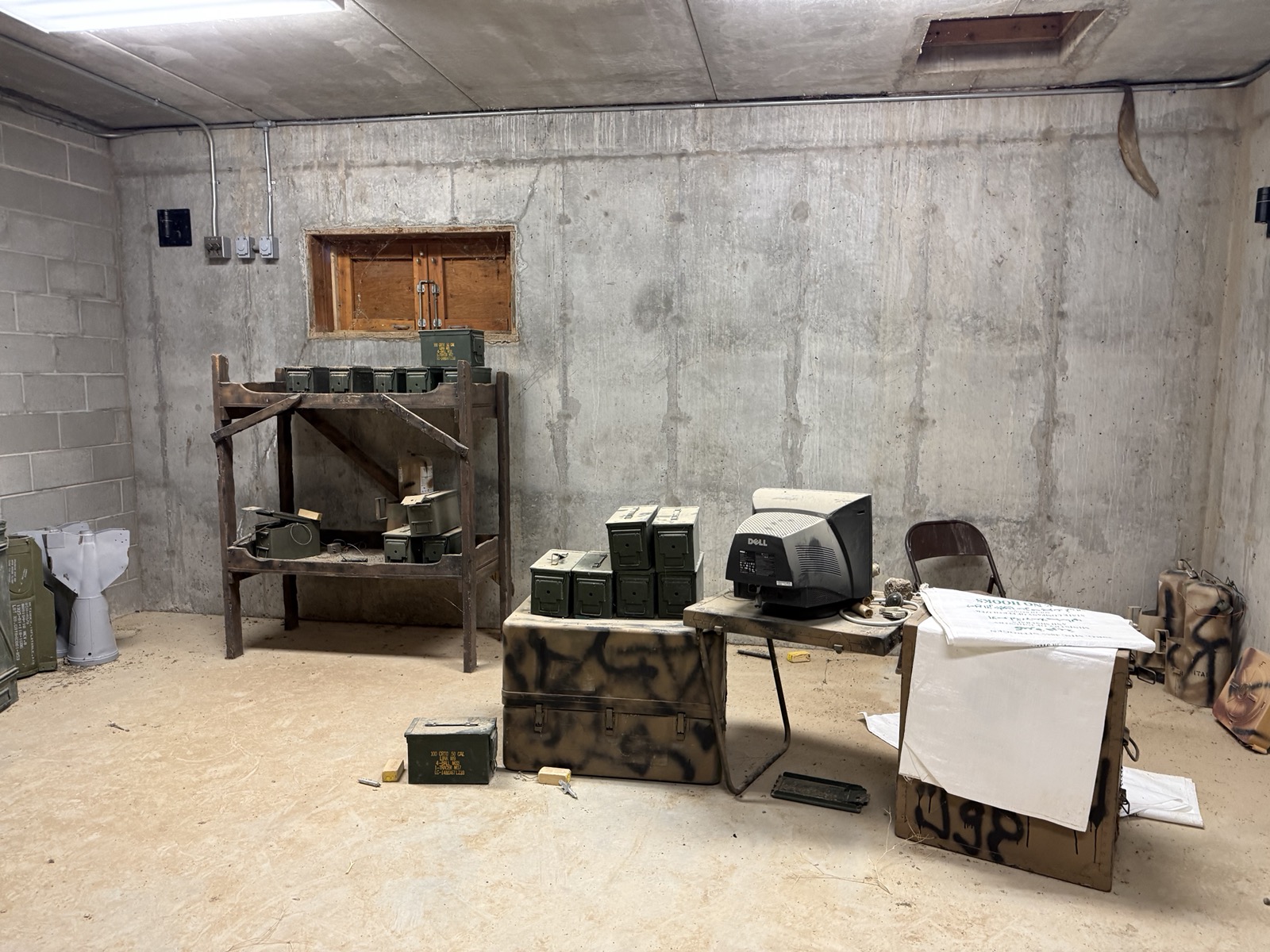
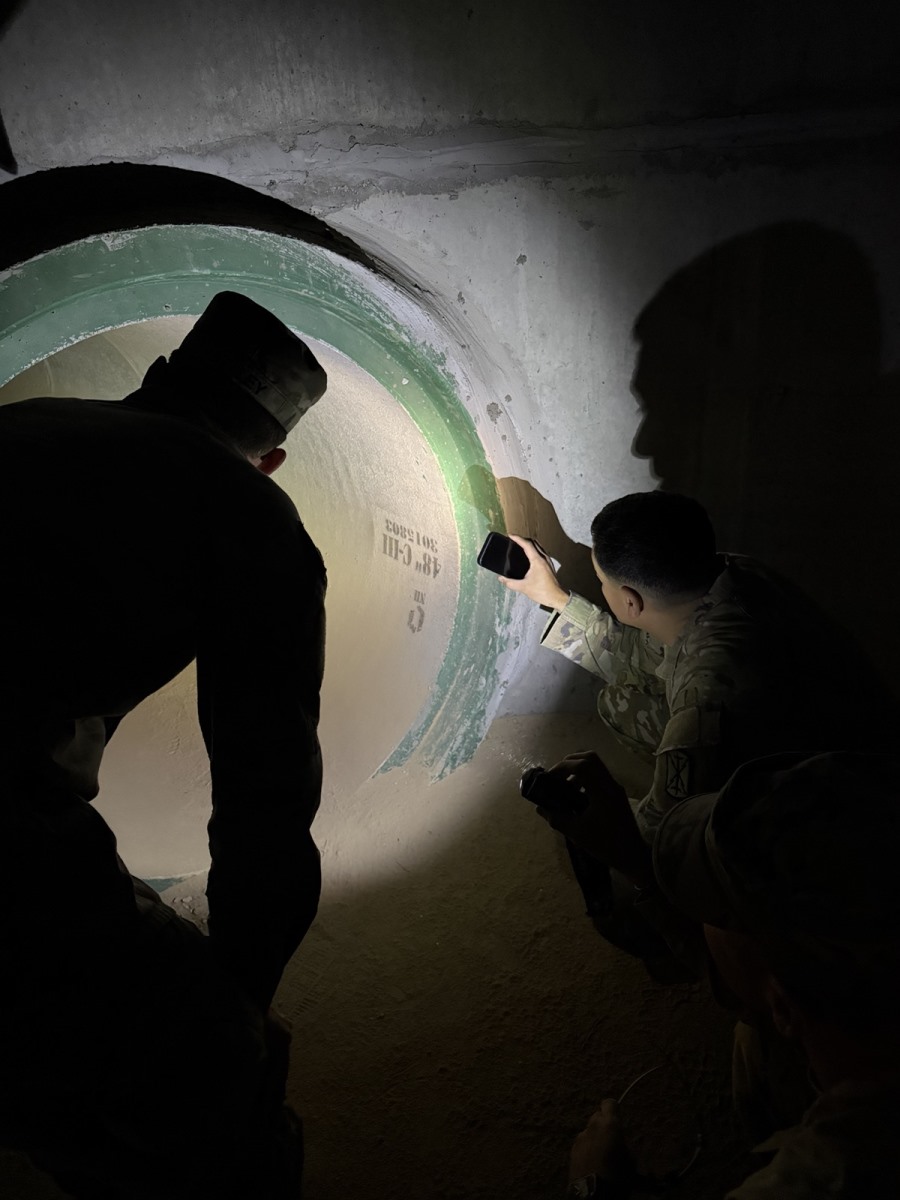
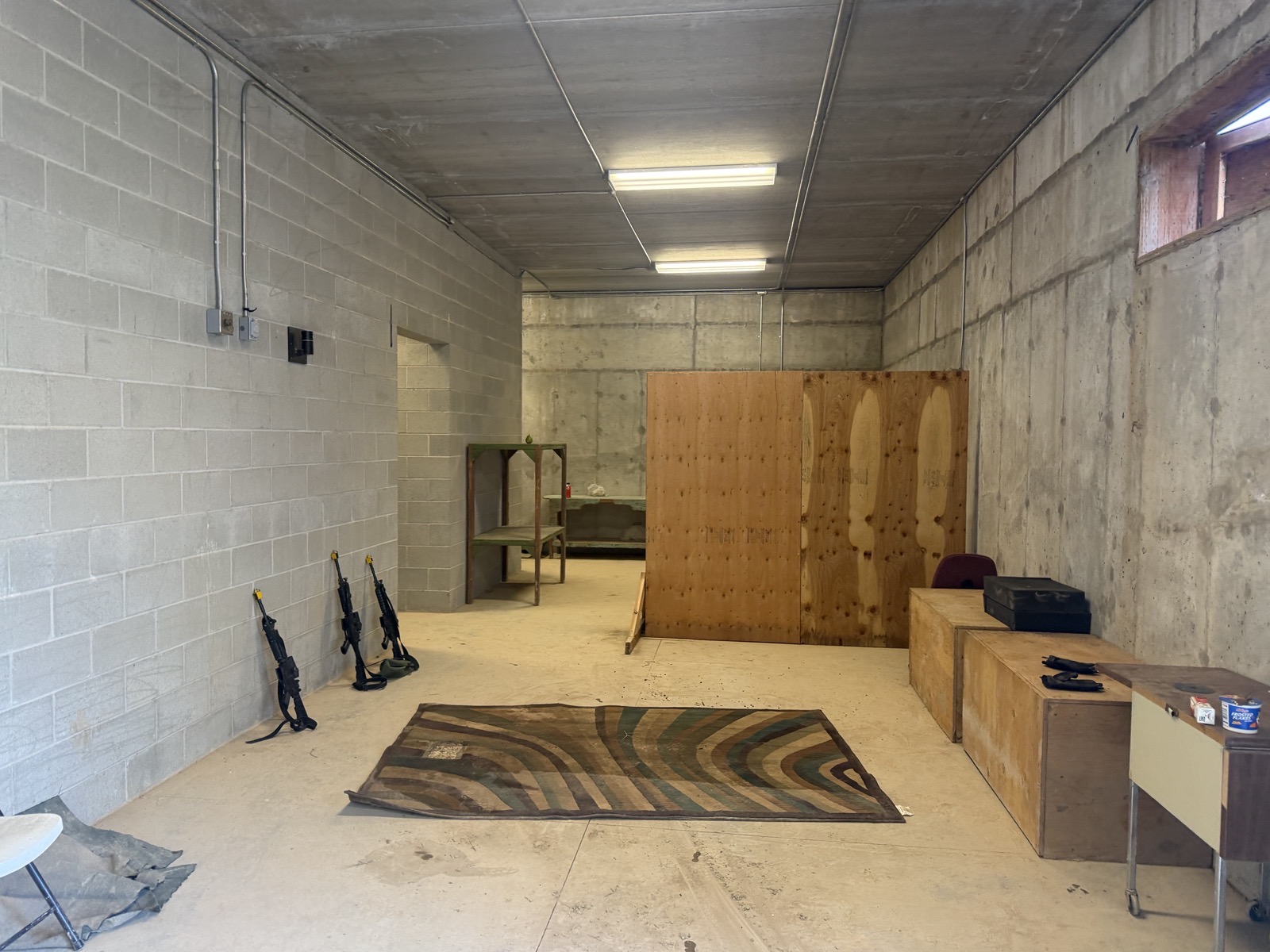
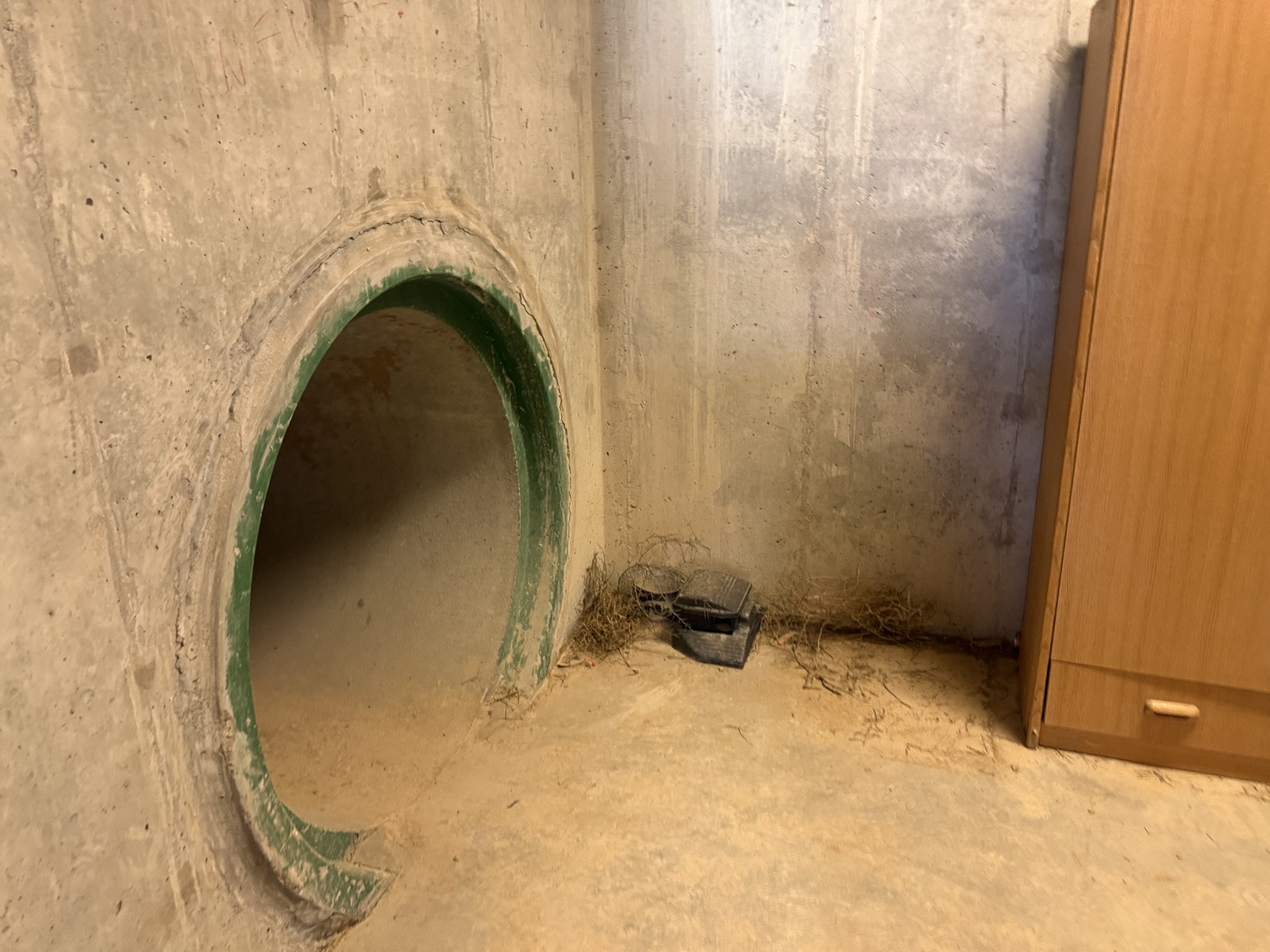
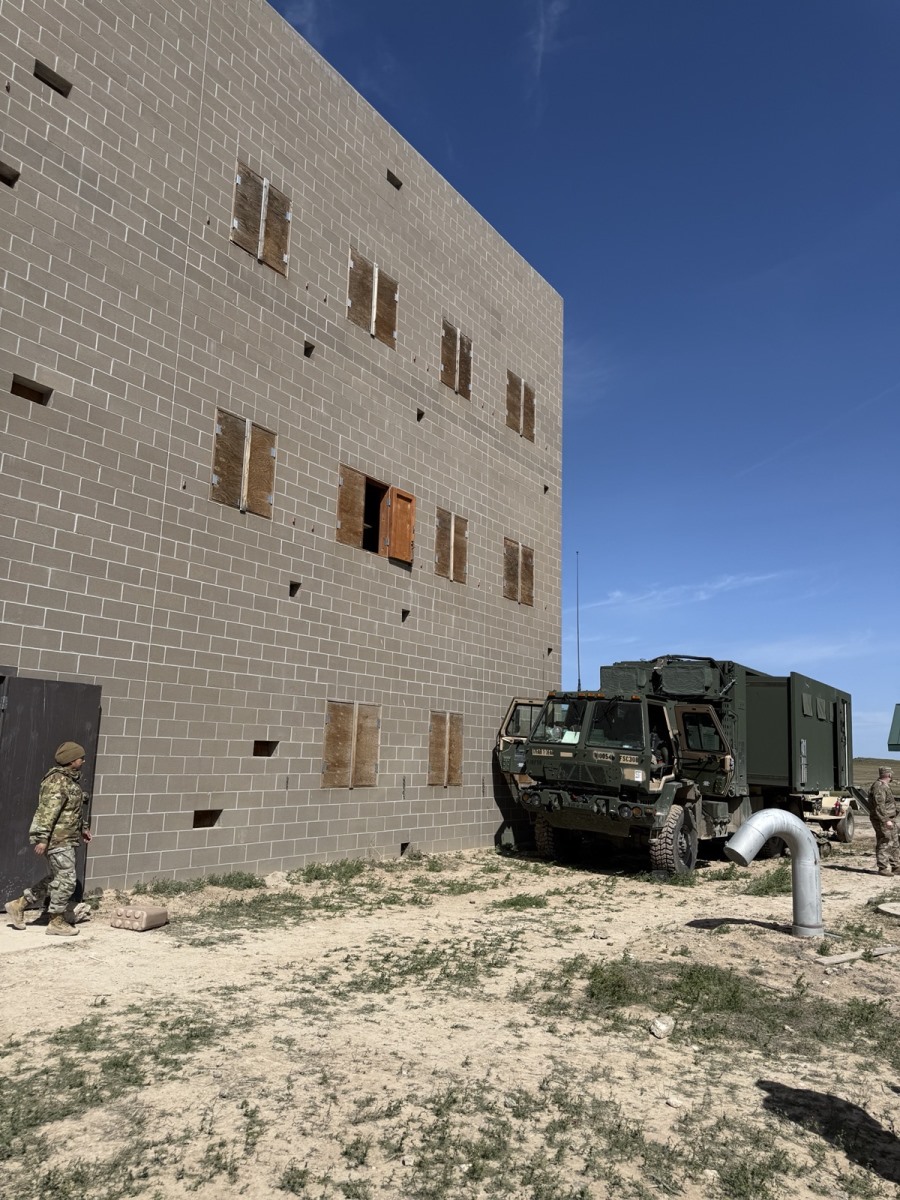
With edge-nodes enabling communications anywhere on the planet, 1-3 FAR tested whether a battalion command post could operate from a UGF. After five days of operations from the basement of a military operations on urban terrain (MOUT) site, the answer was yes.
The battalion FDC, current operations (CUOPS), future operations (FUOPS), Administration and Logistics Operation Center (ALOC), and Role 1 medical treatment facility were in a concrete basement with inter-building tunnels. Drivers hid vehicles between buildings, and they transferred their C2 elements underground. The operation ran entirely off the building’s power, eliminating generator noise.
The concrete created intentional communications challenges, replicating conflict conditions. Solutions required running antennas through ports and windows, with Starshield providing upper tactical internet. The ALOC separation from the main command post—a lesson from Operation Tropic Thunder—allowed sustainment operations to continue without competing for bandwidth or physical space. Accounting for the digital signature remains a task for future experiments.
Survivability advantages in these environments are substantial—concrete provides natural protection against electronic warfare, signals intelligence targeting, indirect fire, and air strikes. All these benefits came at a steep cost; mobility. The battalion needed to keep the C2 architecture agnostic to prove the concept could work anywhere—so it used what it had.
The F2DC: Ultra-Mobile Fire Direction
The F2DC (a playful designation combining the FDC and the mode of transportation) was a Ford F250 pickup truck configured as a standalone fire direction center. The crew consisted of three personnel: the fire direction officer (FDO) and two senior fire control NCOs. Equipment included AFATDS, Starshield terminal, SIPR laptop, MUOS manpack, and a Jackery battery. The Jackery solved the problem of the truck not having enough outlets to power everything. On a full charge, F2DC could operate for about two hours. MUOS provided redundant beyond line-of-sight communications independent of Starshield, making the F2DC self-sufficient for fire direction.
By having FDO and two self-sufficient NCOs, the F2DC eliminated the traditional layers of supervisory overhead. The trio could process fire missions as fast as the equipment could calculate tactical firing data, making the setup ideal for a raid-style mission command node.
For the Indo-Pacific, the method of transportation requires modification—a Ford F250 stands out in Asian urban environments while the FDC’s signal blends in among the citizens’ internet use. The solution: move the setup to a region-specific vehicle.
Note that the F2DC isn't a replacement for traditional command posts—it's a specialized tool. It thrives in urban environments and missions where getting in, shooting, and getting out are among its objectives. But the edge-node concept that made the F2DC possible also enabled something more ambitious: commanding fires across unprecedented distances.
Fire Direction at Distance and LRGRs
The edge-node concept's most dramatic validation came from directing fires for Boxer Battery's platoon—500 miles away at YTC and Dugway, Utah—while the battalion main operated from Orchard Combat Training Center in Idaho. With MUOS and Starshield, distance became irrelevant. Ammunition management adapted through a shared SIPR Teams tracker—firing batteries, S-4, and FDO updated in real-time, eliminating lag time.
While Boxer demonstrated fires at distance, Apex Battery tested mobility at scale. Apex Battery executed two LRGRs as alternatives to High-Mobility Artillery Rocket System Rapid Infiltrations (HIRAINs). The first covered 50 kilometers in two hours while the second covered 160 kilometers in five hours and integrated a refuel-on-the-move (ROM) and rapid reload and resupply point (R3P) into the route. C2 during movement relied on JBC-P and MUOS, with the edge-node concept maintaining continuous communications throughout. Sustainment integration was seamless—the ROM and R3P were pre-planned and positioned along the route, proving that distributed sustainment is viable during high-tempo operations.
The ground raid positioned launchers deep into simulated enemy territory where they engaged targets at range then withdrew without the preamble of selecting multiple locations for hides or alternate position areas artillery (PAAs). Many Pacific islands are long and narrow, lacking airfields for HIRAIN but possessing road networks where a platoon could replicate this event. Doing so provides a deep strike capability when air assets are unavailable or denied.
Boxer’s HIRAIN and Apex’s LRGR culminated in a simultaneous live fire in Idaho and Utah. Two time zones, two states, one fire mission—that's what the edge-node concept enabled 1-3 FAR to do. Not every experiment was successful, though.
The sUAS intended to provide reconnaissance of reload sites failed due to limited range (~500 meters), unstable connection, and short flight time (10-12 minutes). The COTS Orqa drone didn’t work for this tactical application, reinforcing lessons from the artillery community's experience with the RQ-11 Raven.
Implications for the Fires Community
Operation CL26 reinforces a central lesson: survivability and tempo in LSCO depend less on acquiring new platforms than on reorganizing how existing systems are employed. HIMARS units, enabled by long-range and beyond line-of-sight connectivity, are uniquely positioned to lead this metamorphosis.
For doctrine developers, these results demand that distributed headquarters operations and hardened facility C2 procedures be added to the literature. For trainers, it highlights the importance of rehearsing displacement and distributed fires as routine operations rather than exceptional events. For commanders, it proves that units can adapt to archipelagic LSCO—without waiting for acquisition to catch up.
Recommendations
Rocket battalions need to incorporate MUOS-enabled edge-nodes down to the platoon level and keep them at the top of their PACE plans. Doctrine must study how these units can operate underground and camouflaged among the clutter of 21st century civilian life. Rocket units should practice LRGRs with sUAS-integrated overwatch and share their observations so doctrine can catch up.
Conclusion
CL26 let a HIMARS battalion prove that it can command from underground, simultaneously direct live fires and HIRAINs across state lines, and conduct deep ground raids using existing systems when organized deliberately. The fires community cannot afford to wait for the slow turn of the acquisition wheel; it must bridge the gap between legacy doctrine and modern necessity through deliberate, field-driven experimentation.